The one thing you should know about Notre Dame Santiago


In Notre Dame Global’s series The One Thing, we are in conversation with the directors of each of Notre Dame’s 12 global locations to discover the one thing they would like the Notre Dame community to know about their programs, achievements, goals, or aspirations.
We turn now to Notre Dame Santiago and its director, Juan Esteban Montes. Montes is a graduate of the Holy Cross secondary school in Santiago, St. George’s College, and earned his M.A. and Ph.D. candidacy in political science from Notre Dame, as well as a law degree from the Catholic University in Santiago. He joined Notre Dame Global (NDG) in 2007. Prior to joining NDG, Montes served as the resident director of the Notre Dame-UWMilwaukee-Marquette Consortium Program in Santiago since 2002.
What is the one thing you would like the Notre Dame community to know about Notre Dame Santiago?
“While we have developed strong partnerships with several Chilean universities, we are unique in that we have a long-term, strategic, and profound partnership with one: the Pontificia Universidad Católica de Chile (UC Chile), widely ranked as one of the top universities in Latin America and certainly the continent’s preeminent Catholic university.”
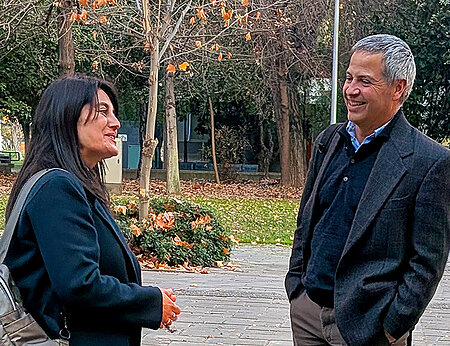
JUAN ESTEBAN MONTES: It was a bold decision at the beginning of Notre Dame Santiago, in 2007, to focus our energies on one institution, but time has proven our instincts correct. With similar identities and missions grounded in shared Catholic identities, we have forged a strategic, multi-level partnership with UC Chile. It is the southern hemisphere’s top Catholic institution—mirroring Notre Dame’s position in the northern hemisphere.
Throughout our decades of partnership, there have been many points of contact, numerous collaborations, and immense benefits for faculty and students at both institutions. The result is a deep friendship, deep alignment, and deep trust.
Why is that one thing—a profound partnership with the Pontificia Universidad Católica de Chile (UC Chile)—so important to Notre Dame Santiago and to Notre Dame as a whole?
“It makes our level of collaboration unprecedented. Just last year, Notre Dame and UC Chile signed an agreement allowing dual degrees in more than 40 doctoral programs.”
JUAN ESTEBAN MONTES: Twelve years ago, Notre Dame and UC Chile began a dual-degree program in engineering. After its success, dual-degree candidacy was extended to the sciences, social sciences, and humanities—with expectations set highest for literature, philosophy, and theology.
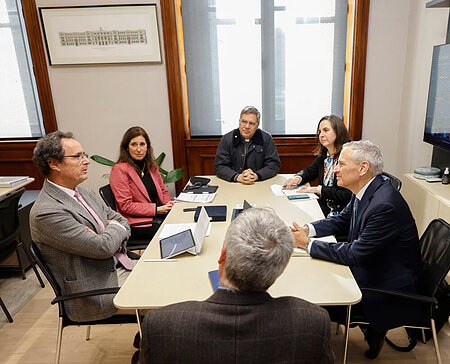
The benefits of an expanded dual-degree program extend beyond any particular candidate. The very existence of the possibility of dual degrees offers significant opportunities for interdisciplinary collaboration, with faculty involvement as the cornerstone of the initiative. The agreement with UC Chile also aligns with Notre Dame's Strategic Framework, which prioritizes deepening academic impact through global partnerships, interdisciplinary collaboration, and furthering global research initiatives.
In its alignment with the Strategic Framework, the expanded dual-degree program reflects a key institutional change. While student study abroad experiences have been and will remain important to Notre Dame Santiago and to our division overall, all programs within NDG are emphasizing research collaborations and are extending more resources to these endeavors.
Notre Dame Santiago has been at the forefront of that trend in international research collaborations. Between 2013 and 2024, there were nearly 200 collaborations between Notre Dame and UC Chile through Luksic Scholars Foundation grants.
The Luksic grants were generous in themselves; but what proved to be key was that they did exactly what was intended. The critical seed of that partnership was a belief in the vast benefits—indeed, the multiplying effects—of an investment in human interaction and a conviction that powerful things happen from small-scale relationship-building.
Three Notre Dame faculty members, Anne García-Romero (Department of Film, Television & Theatre within the College of Arts and Letters), Rob Nerenberg (Civil and Environmental Engineering and Earth Sciences within the College of Engineering), and Steve Reifenberg (Keough School of Global Affairs) exemplify the power of the Luksic Foundation grants.
Since our last summary of the grants (see “Ten Years of Success with Luksic Scholars Foundation Grants”):
Anne García-Romero has a new co-edited volume, Dramaturgas Chilenas: Plays by Chilean Female Writers in the Early 21st Century, published in May 2026 by Methuen Drama, the world's leading publisher of theatrical translations.
Rob Nerenberg assisted fellow Notre Dame Engineering professor Brett Savoie (Chemical and Biomolecular Engineering) with his summer school course on AI at UC Chile (see Pontificia Universidad Catolica de Chile SAI Winter School Launches in Santiago); participated in a Chilean-government-funded grant for the valorization of agricultural wastes, led by the University of Talca in Chile; and continues investigating new strategies to fight oral biofilm infections using low-frequency ultrasound through a seed grant funded jointly through Notre Dame Bioengineering and Life Sciences and UC Chile’s Instituto de Ingeniería Biológica y Médica seed grant program, together with Prof. Sebastian Aguayo of UC Chile.
Steve Reifenberg, who was instrumental in introducing the Luksic family to Notre Dame, has continued work with UC Chile to construct models for experiential learning opportunities for undergraduates, allowing them to be creative and authentic while contributing to the communities they serve.
Finally, on the undergraduate front, the impact of our decades-long, deep partnership with UC Chile means that the 40 or so Notre Dame students who choose to study in Santiago each year gain access to the entire university—to all classes and the opportunity to embrace the same experiences as their Chilean counterparts, including participation in campus ministry and service opportunities. Additionally, a program that pairs Notre Dame students with UC Chile counterparts has proven to be particularly rewarding to students.
What does that one thing—a profound collaboration with a specific institution—reveal about Notre Dame Santiago and Chile as a whole?
“All of Notre Dame Santiago’s interactions with UC Chile are based on deep friendship. In Spanish, the word ‘amistoso’ describes our institutional relationship best—and, while not entirely translatable, some English words that express the concept of ‘amistoso’ are ‘friendliness,’ ‘kindness,’ or a ‘welcoming attitude.’”
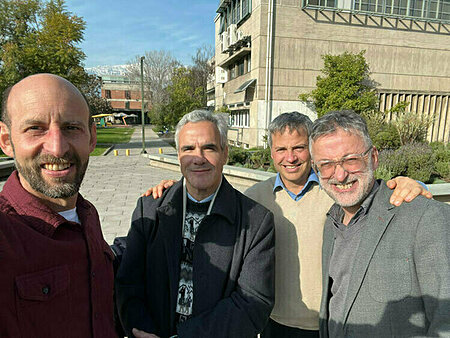
JUAN ESTEBAN MONTES: The level of friendship, trust, and collaboration between our two universities is possible only with institutions that share values, mission, identity, and the highest possible respect. It is the very opposite of a top-down, extractive, or colonial relationship.
The idea of amistoso is replicated not only at the institutional level, but at the individual level. The students who choose to come to Santiago are young people open to deep cultural immersion. They live with a local family, travel locally, and explore Chile in a unique way. That is exemplified in the story of Anne Geiger ’27, who studied in Santiago twice—first in a language immersion summer program and then, during her junior semester, living with a different host family and joining the UC Chile women’s rugby club team.
Likewise, when faculty come here, they often develop long-term, peer-to-peer, and friendship-like relationships. The three faculty members mentioned above in connection with the Luksic Foundation grants exemplify the concept of amistoso, and there are many more throughout the years who have forged a deep friendship with their Chilean counterparts. We hope to continue to build on that momentum with a current collaborative grant program, Avanza UC 2026.
Learn more about the work of Notre Dame Santiago and the University of Notre Dame’s global network, or browse related articles:
- University of Notre Dame and Pontificia Universidad Católica de Chile Dual PhD program welcomes all disciplines
- Ten Years of Success with Luksic Scholars Foundation Grants: A testimony to the multiplying effects of collaboration
- Junior Veronica Bofah named 2026 Key into Public Service Scholar
- Chile provides fruitful opportunities for collaboration and research
- Reifenberg awarded Fulbright to develop programs at pontifical university in Chile
Learn more about the collaborative work and partners of Notre Dame Santiago
The history of the Congregation of the Holy Cross and the University of Notre Dame in Santiago
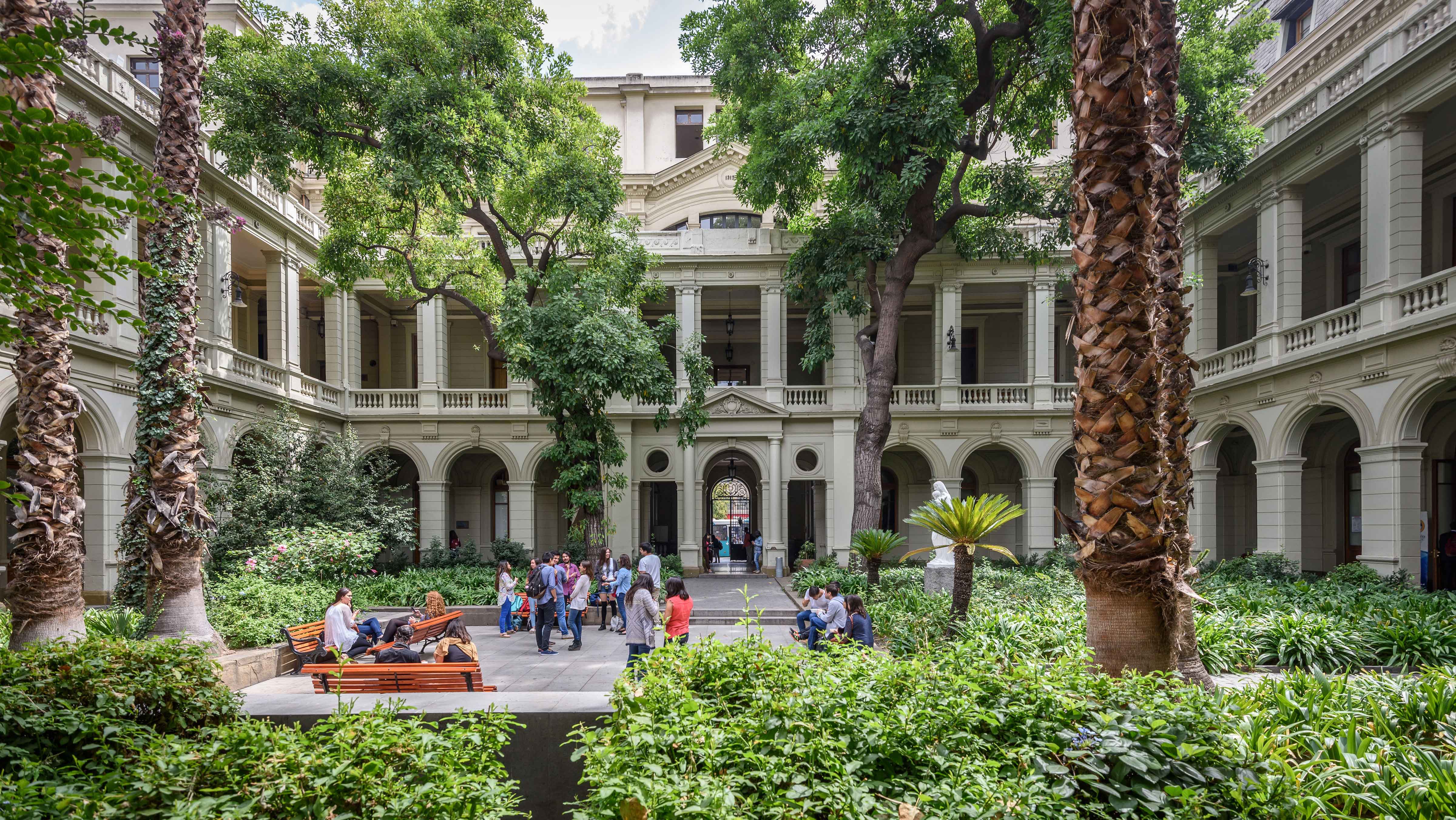
The partnership and friendship between Notre Dame and the Pontificia Universidad Católica de Chile (UC Chile) is grounded in the history in Chile of the Congregation of the Holy Cross.
In 1943, at the invitation of the Archbishop of Santiago, the Congregation sent three priests to teach at St. George’s College, a Catholic school devoted then and now to primary and secondary education.
While the Holy Cross priests quickly expanded their work to include parish ministry and education in several poor Santiago neighborhoods, their efforts at St. George’s propelled the school into the top echelon. Over the past 80 years, St. George’s has produced many of Chile’s leaders—in politics, science, culture, and the arts. It continues to be administered by the Congregation of the Holy Cross.
With the Holy Cross presence at St. George’s, Notre Dame began to develop academic and service partnerships in Chile in the 1970s through the Institute for Social Concerns, the Kellogg Institute for International Studies, the Klau Institute for Civil and Human Rights, and the Alliance for Catholic Education.
Notre Dame undergraduates studied in Santiago for many years through a study abroad consortium. Establishing an academic center there administered solely by Notre Dame was the next logical step. Notre Dame Santiago opened in 2007.
While UC Chile is not affiliated with the Holy Cross order, administrators’ knowledge of the impact in Santiago of both the Congregation and the University of Notre Dame made collaboration and friendship between the two Catholic universities straightforward from the start.
Annie Geiger ’27, physics and astronomy major and member of the Notre Dame women’s rugby team, studies twice in Santiago

Annie Geiger ’27 chose to study in Santiago twice—in a summer program after her first year at Notre Dame and again for an entire semester during her junior year.
Each experience was special in its own way.
The intensity of summer language immersion captivated her, while the semester study exposed her to “a very different side of the country and a different demographic of people that complemented my first experience very well, giving me a more well-rounded vision of what it’s like in Chile.”
Another bonus of two experiences in the country was having two different host families, exposing her to different Chilean family cultures.
Annie, a member of the Notre Dame women’s rugby team, was thrilled to continue to play rugby in Santiago.
That came about through the efforts of Felipe Gomez, director of academic programs and communications at Notre Dame Santiago. He put Annie in touch with the rugby coach at UC Chile. She was invited to practice with the UC Chile team, which led to a teammate asking if she also wanted to join a local club. The rugby field where that club plays, which sits at the edge of the city in the foothills of the Andes, quickly became Annie’s favorite place in Santiago.
Read more about Annie’s immersive experiences in Chile or learn more about Notre Dame Santiago programs, including semester and summer study for undergraduates, graduate students, and law students.
Avanza UC 2026: An invitation from the Pontificia Universidad Católica de Chile (UC Chile) to Notre Dame faculty to engage in international collaborative research
Notre Dame Santiago is actively promoting Avanza UC 2026, an international collaborative research fund from UC Chile aimed at strengthening strategic global research partnerships.
Avanza UC supports cutting-edge, collaborative seed fund projects across all disciplinary and interdisciplinary fields, particularly those able to address major societal challenges with global projection. The program provides up to USD $35,000 per project to support the UC Chile research team, with partner institutions expected to provide complementary funding for their own researchers.
Over the years, Notre Dame and UC Chile have developed a strong and strategic partnership through academic mobility, a university-wide dual Ph.D. program, and funded research collaboration projects. Avanza UC offers an excellent opportunity to further deepen and expand these collaborations.
The call particularly welcomes:
- Innovative and high-impact research ideas,
- Interdisciplinary collaboration,
- Projects with long-term strategic potential, and
- Initiatives connecting local and global challenges.
The call closes at the end of September 2026, with projects expected to begin in April 2027 and have a duration of up to 18 months. Potential matching funds from Notre Dame or other sources may have a different deadline.
For more information, please contact Juan Esteban Montes, director, Notre Dame Santiago, at jmontes@nd.edu.
Originally published by at global.nd.edu on September 04, 2026.